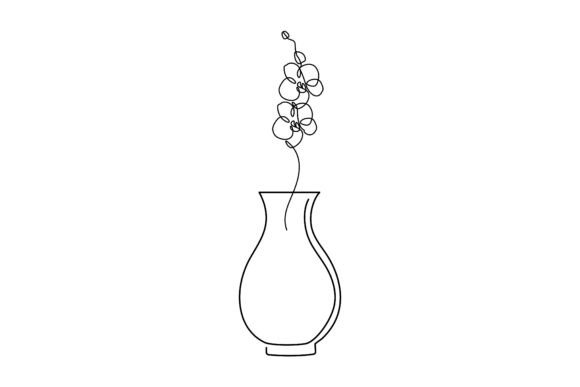
One Line Art Vase with Orchid Flowers
In the world of visual communication, less is often more. There is a distinct power in simplicity, a quiet confidence that speaks louder than cluttered compositions. This is precisely where the One Line Art Vase with Orchid Flowers finds its place. It is not merely a graphic element; it is a study in restraint and elegance. For designers, marketers, and content creators who understand the weight of white space, this continuous single-line drawing offers a sophisticated solution to the challenge of adding organic beauty without visual noise.
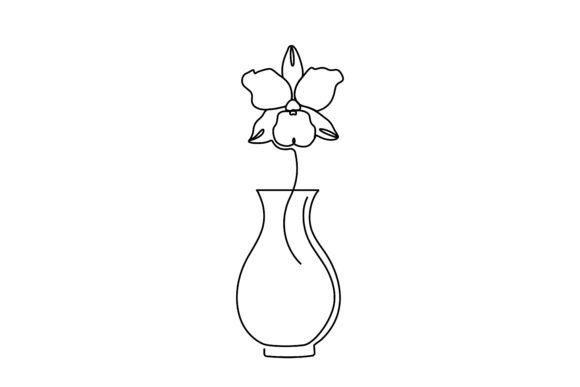
The concept behind this artwork is deceptively simple yet technically demanding. A single, unbroken line traces the contour of a classic vase, flows upward to form the stem, and delicately outlines the blooming orchid flowers. There are no lifts, no breaks, and no corrections. The result is a seamless flow that guides the viewer’s eye from the base of the vessel to the tip of the highest petal. This minimal linear artwork captures the essence of the subject rather than its photographic reality, creating a piece that feels both modern and timeless.
The Aesthetic Appeal of Continuous Line Drawing
What makes the One Line Art Vase with Orchid Flowers so compelling is its ability to convey complex forms through reduction. Orchids are inherently intricate flowers, known for their symmetrical perfection and delicate textures. Translating such detail into a single continuous line requires a keen eye for proportion and balance. The artist must decide which curves are essential and which can be implied. This selective representation gives the illustration a unique personality—graceful, airy, and refined.
The visual characteristics of this piece lean heavily into the realm of modern typography and minimalist design principles. The line weight is consistent, providing a clean, vector-like quality that scales effortlessly. Whether viewed on a high-resolution monitor or printed on textured paper, the clarity remains intact. The editable outline ensures that every petal and leaf is beautifully projected, allowing users to tweak the curvature or thickness to match their specific brand identity. This level of customization is crucial for professionals who need assets that feel bespoke rather than generic.
Unlike a serif font that relies on traditional strokes or a script font that mimics handwriting, this line art operates as a visual metaphor. It suggests movement and growth. The continuous nature of the line implies connectivity and flow, making it an excellent symbolic choice for businesses focused on wellness, sustainability, or holistic services. It avoids the rigid structure of a standard sans serif font, offering instead an organic alternative that softens the overall aesthetic of a layout.
Strategic Applications Across Design Disciplines
Versatility is the hallmark of effective design assets. The One Line Art Vase with Orchid Flowers is not limited to a single medium. Its adaptability makes it a valuable tool across various creative fields, from digital interfaces to physical packaging. Understanding where and how to deploy this illustration can significantly enhance the impact of your projects.
In logo design, simplicity is paramount. A complex emblem often fails when scaled down for social media avatars or favicon usage. This single-line orchid vase retains its recognizability even at small sizes. It serves as a strong primary mark for boutiques, spas, florists, or lifestyle brands that wish to project an image of understated luxury. When paired with a clean display font, it creates a cohesive visual system that is both memorable and professional.
For packaging design, particularly in the beauty and wellness sectors, this artwork adds a touch of artisanal charm. Imagine a skincare serum bottle with a matte finish, where the gold-foiled outline of the orchid vase wraps around the label. The minimalism allows the product itself to take center stage while the artwork provides context and emotional resonance. It signals to the consumer that the brand values purity and elegance, aligning the visual experience with the product promise.
In editorial design and publishing, this clipart functions beautifully as a section breaker or a chapter header illustration. It provides a visual pause in text-heavy layouts, giving the reader’s eye a moment to rest. Because it is available in PNG, JPG, and EPS formats, it integrates seamlessly into both print magazines and digital blogs. The transparent background of the PNG file allows it to sit over colored blocks or photographic backgrounds without awkward white boxes, maintaining the integrity of the design.
Social media graphics benefit immensely from this type of content. In an feed saturated with loud colors and busy animations, a static, minimalist line drawing stands out through its calmness. It works well for quote cards, story highlights, or promotional posts for spring collections. The aesthetic appeals to the curated look popular on platforms like Instagram and Pinterest, where visual consistency drives engagement.
Enhancing Brand Perception and Visual Hierarchy
Beyond aesthetics, the choice of imagery influences how an audience perceives a brand. Using the One Line Art Vase with Orchid Flowers communicates specific values: sophistication, attention to detail, and a preference for quality over quantity. It suggests that the brand is confident enough to let its message breathe, rather than shouting for attention. This subtle psychological cue can elevate brand perception, positioning a company as premium and thoughtful.
Visual hierarchy is another critical consideration. In web design, clutter is the enemy of conversion. By incorporating minimal linear artwork, you create focal points without overwhelming the user. The orchid vase can serve as an anchor element, drawing the eye to a call-to-action or a key value proposition. Its organic curves contrast nicely with the straight lines of grid-based web layouts, creating a dynamic tension that keeps the interface interesting.
Consistency is key to building recognition. When this artwork is used across touchpoints—from business cards to email signatures—it reinforces the visual language of the brand. It acts similarly to a handwritten font in terms of personality, adding a human touch to digital interactions. However, unlike some decorative fonts that suffer from readability issues, this line art is universally understood. It transcends language barriers, making it an excellent choice for global audiences.
Practical Guidance for Implementation
Integrating this asset into your workflow requires a strategic approach. Here are practical steps to ensure you maximize its potential:
- Evaluate Project Fit: Before downloading, consider the tone of your project. Does it require the softness of organic lines, or does it need the rigidity of geometric shapes? This artwork suits projects aiming for elegance, calm, and natural beauty.
- Test Font Pairings: Since the illustration is delicate, pair it with typefaces that complement rather than compete. A light-weight san serif font works well for a modern look, while a classic serif font can add a touch of traditional authority. Avoid overly bold or decorative fonts that might overshadow the fine lines of the orchid.
- Check Licensing and Formats: Ensure you have the right commercial license for your intended use. The availability of EPS files is crucial for scalability in large-format printing, while PNGs are ideal for quick digital use. Verify that the outline is fully editable if you plan to modify the line weight or color.
- Consider Readability and Contrast: When placing the line art over backgrounds, ensure sufficient contrast. A thin black line on a dark gray background may disappear. Use color inversion or add a subtle drop shadow if necessary to maintain visibility.
- Maintain Consistency: If you use this style of line art, stick to it. Mixing highly detailed illustrations with minimal line drawings can create visual dissonance. Build a library of similar assets to maintain a cohesive brand identity.
Ultimately, the One Line Art Vase with Orchid Flowers is more than just a decorative plant clipart. It is a versatile tool for storytellers and designers who value precision and grace. By understanding its visual language and applying it thoughtfully, you can create designs that resonate deeply with your audience, offering them a moment of beauty in a crowded digital landscape.