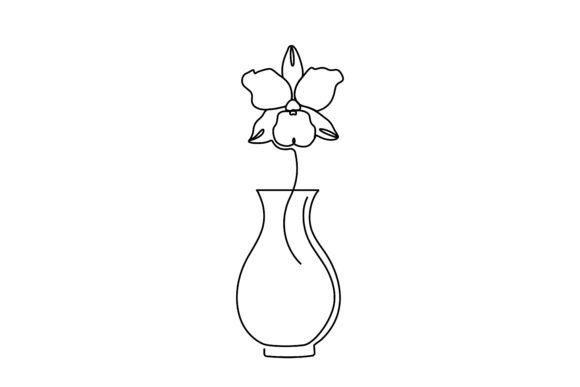
One Single Line Drawing of Vase Flowers: Integrating Minimalist Art into Modern Design Workflows
In the fast-paced world of digital design and interior styling, the demand for assets that convey sophistication without visual clutter is at an all-time high. The One Single Line Drawing of Vase Flowers has emerged not merely as a decorative trend, but as a functional tool for creators, marketers, and homeowners alike. This artistic approach, characterized by its unbroken contour and elegant simplicity, offers a unique solution for those seeking to infuse spaces and projects with timeless elegance. By stripping away extraneous details, this style forces the viewer to focus on form, balance, and the essential beauty of the subject.
For professionals ranging from graphic designers to small business owners, understanding how to effectively implement these minimalist assets is crucial. It is not enough to simply acquire a file; one must understand where it fits within the broader creative workflow. Whether you are designing a brand identity, curating a home office environment, or creating content for social media, the continuous line drawing serves as a versatile anchor point that enhances rather than overwhelms the surrounding elements.
The Strategic Value of Continuous Line Art in Professional Contexts
The appeal of the One continuous single line drawing of beautiful gardening flowers lies in its adaptability. In a professional setting, visual noise can distract from core messaging. Minimalist artwork acts as a visual breath, allowing key information to stand out. When integrated into a marketing campaign or a corporate presentation, these drawings provide a sense of calm and refinement that aligns with modern aesthetic preferences.
Consider the workflow of a content creator or blogger. When drafting articles or designing newsletters, the inclusion of heavy, complex illustrations can sometimes compete with the text. A minimalist artwork piece, such as a vase of orchids rendered in a single line, complements typography without fighting for attention. It serves as a subtle divider, a header accent, or a footer element that maintains visual consistency across multiple pages or posts. This consistency is vital for brand recognition and user experience.
Furthermore, for entrepreneurs and small business owners, the cost-effectiveness and ease of use of vector-based line art cannot be overstated. Unlike photographic assets that may require extensive editing to match color schemes or lighting conditions, line drawings are inherently neutral. They can be scaled infinitely without loss of quality and recolored instantly to match brand guidelines. This efficiency streamlines the production process, allowing teams to iterate quickly and maintain a cohesive visual language across all touchpoints.
Technical Implementation and File Format Compatibility
To fully leverage the potential of these assets, it is essential to understand the technical specifications provided. The availability of files in EPS, JPG, and PNG formats ensures compatibility with a wide range of software and use cases. Each format serves a distinct purpose in the design workflow.
- EPS (Encapsulated PostScript): This is the preferred format for professional designers using vector-based software like Adobe Illustrator or CorelDRAW. Because EPS files are vector-based, they allow for complete editability. You can adjust the stroke weight, change the color, or even modify the shape of the orchid flowers if necessary. This format is ideal for large-scale printing, such as banners, posters, or packaging, where resolution independence is critical.
- PNG (Portable Network Graphics): For digital applications, PNG is often the go-to choice. These files typically support transparency, which means the line drawing can be placed over any background color or image without a visible white box around it. This is particularly useful for web design, social media graphics, and app interfaces. The clarity of the line remains sharp on high-resolution screens, ensuring that the delicate charm of the artwork is preserved.
- JPG (Joint Photographic Experts Group): While less flexible than vector formats, JPGs are universally supported and have smaller file sizes. They are suitable for quick previews, email signatures, or situations where transparency is not required. However, users should be cautious when scaling JPGs, as they can lose quality if enlarged beyond their original dimensions.
Understanding these distinctions allows for smoother integration into existing workflows. For instance, a marketer might use the PNG version for Instagram stories while sending the EPS file to a printer for business cards. This strategic selection of formats prevents technical bottlenecks and ensures the final output meets quality standards.
Integrating Minimalist Art into Interior and Spatial Design
Beyond digital screens, the One Single Line Drawing of Vase Flowers has a profound impact on physical spaces. For interior designers and homeowners, the concept of "elegance home decorative elements" is central to creating environments that promote tranquility and focus. The minimalist nature of continuous line art makes it an ideal candidate for wall decor, particularly in spaces dedicated to work or relaxation.
When planning a room layout, consider the placement of these artworks in relation to other elements. A large-scale print of gardening flowers can serve as a focal point in a minimalist living room, balancing out sleek furniture and neutral tones. The organic curves of the orchids soften the hard lines of modern architecture, creating a harmonious blend of nature and structure. This interaction between the artwork and the space is key to achieving the desired atmospheric effect.
Moreover, the versatility of the single-line style allows for experimentation with materials. These designs are not limited to paper prints. They can be translated into metal wall sculptures, embroidered textiles, or even etched glass partitions. For DIY enthusiasts and makers, the simplicity of the line makes it an excellent template for various craft projects. By tracing the continuous line, one can create custom pieces that reflect personal taste while adhering to the principles of minimalist design.
Workflow Tips for Consistent and High-Quality Usage
To ensure that the use of One Single Line Drawing of Vase Flowers remains effective and professional, several best practices should be observed throughout the implementation process.
- Maintain Visual Hierarchy: When incorporating line art into a layout, ensure it does not compete with primary content. Use whitespace generously around the drawing to let it breathe. This enhances the perception of elegance and prevents the design from feeling cluttered.
- Consistency in Stroke Weight: If using multiple line drawings in a single project, ensure that the thickness of the lines is consistent. Variations in stroke weight can create visual dissonance. Most vector files allow for easy adjustment of stroke width to match other graphical elements in your design system.
- Color Coordination: While black and white is classic, do not hesitate to experiment with color. A soft pastel or a muted earth tone can add warmth to the orchid flowers without sacrificing the minimalist aesthetic. Ensure that the chosen colors align with the overall palette of the project or room.
- Quality Control: Always review the final output at actual size. What looks good on a screen may appear different when printed or viewed on a mobile device. Check for any jagged edges in raster formats or unintended overlaps in vector files.
By adhering to these guidelines, users can maximize the impact of their minimalist assets. The goal is to create a seamless experience where the art enhances the message or environment without drawing undue attention to itself. This subtle power is what makes the continuous line drawing such a valuable tool in both digital and physical design contexts.
Long-Term Benefits of Minimalist Asset Libraries
Investing in a library of high-quality minimalist artwork yields long-term benefits for any creative professional or organization. These assets are timeless; they do not succumb to fleeting trends as quickly as more stylized or complex illustrations might. This longevity means that once integrated into a brand’s visual identity or a home’s decor, they remain relevant and appealing for years.
Additionally, the simplicity of the One continuous single line drawing of beautiful gardening flowers facilitates easier collaboration. When working with external partners, such as printers, web developers, or interior decorators, clear and simple assets reduce the risk of miscommunication. There is less ambiguity in how a single line should be rendered compared to a complex, multi-layered illustration. This clarity speeds up approval processes and reduces the need for revisions.
Ultimately, the adoption of this artistic style reflects a commitment to clarity, efficiency, and refined taste. Whether used to elevate a brand’s digital presence or to create a serene home environment, the One Single Line Drawing of Vase Flowers offers a practical and aesthetically pleasing solution. By understanding its technical requirements and strategic applications, users can seamlessly integrate this elegant form of expression into their daily workflows and living spaces, achieving a balance of beauty and functionality that stands the test of time.