Plants Gone Wild Botanical Chaos 2: Turning Gardening Nightmares into Visual Gold
Every gardener knows that specific moment of panic. You turn your back for a weekend, perhaps just to grab a coffee or handle a minor life emergency, and when you return, the petunias have staged a coup. The ivy is no longer climbing; it is hunting. This universal experience of losing control over nature is exactly what Plants Gone Wild Botanical Chaos 2 captures with such delightful precision. It is not merely a collection of images; it is a visual language for anyone who has ever felt overwhelmed by the sheer, unadulterated vitality of their own backyard.
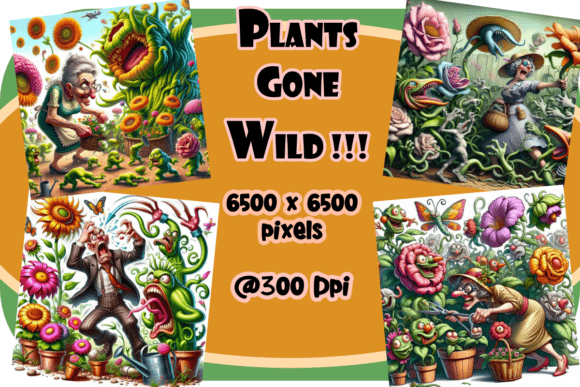
This series takes the concept of "green thumb" anxiety and amplifies it through vibrant, humorous illustrations. We see cartoon characters, faces frozen in exaggerated expressions of shock, battling flowering plants that have developed sentience and a serious attitude problem. The artwork blends whimsical horror with bright, saturated colors, creating a tongue-in-cheek narrative that resonates deeply with modern plant enthusiasts. But beyond the laughs, these high-resolution assets (clocking in at a massive 6500 x 6500 pixels at 300 DPI) offer incredible utility for designers, marketers, and content creators looking to inject personality into their projects.
Bridging the Gap Between Horror and Humor in Design
The primary strength of Plants Gone Wild lies in its tonal balance. Pure horror can be off-putting, and pure comedy can sometimes feel cheap. This collection sits comfortably in the middle, offering a "safe scare" that is perfect for commercial applications. For graphic designers working on book covers, particularly for humorous gardening guides or cozy mystery novels with a horticultural twist, these illustrations provide an immediate hook. The exaggerated expressions of the gardeners serve as a proxy for the reader’s own frustrations, creating an instant emotional connection before a single word is read.
Consider the booming market for self-published e-books and print-on-demand merchandise. Authors and independent publishers are constantly seeking cover art that stands out in a crowded digital marketplace. A standard photo of a rose bush is forgettable. A illustration of a rose bush attempting to swallow a gardener whole? That stops the scroll. The high resolution ensures that whether the final product is a thumbnail on Amazon or a full-size paperback, the details remain crisp, from the individual thorns to the sweat beads on the character’s forehead.
Engaging the Digital Gardening Community
Social media has transformed gardening from a solitary hobby into a highly shareable lifestyle brand. Platforms like Instagram, Pinterest, and TikTok thrive on visual storytelling, and Plants Gone Wild Botanical Chaos 2 is tailor-made for this environment. Plant influencers and garden centers can use these graphics to create relatable content that encourages engagement. When a user posts a picture of their overgrown monstera with a caption about it taking over their living room, pairing it with a stylized illustration from this collection adds a layer of professional polish and humor.
Furthermore, these images are ideal for digital stickers and emojis. Messaging apps are increasingly becoming spaces for niche community expression. A sticker pack featuring these chaotic botanical characters allows plant lovers to communicate their struggles in a fun, visually appealing way. Imagine sending a "help me" sticker that features a character tangled in vines instead of a generic text message. It fosters community bonding through shared humor, a powerful tool for brand loyalty in the gardening niche.
Educational Tools with a Twist
While the imagery is fantastical, it serves a surprising purpose in educational contexts. Teaching children or adults about invasive species can often feel dry or overly technical. By using the whimsical horror elements of Plants Gone Wild, educators can illustrate the concept of unchecked growth in a memorable way. An illustration of a vine strangling a garden shed can serve as a metaphor for how invasive kudzu or English ivy can overwhelm native ecosystems.
This approach lowers the barrier to entry for complex ecological topics. When learners are amused, they are more likely to retain information. Botanical gardens and flower shows can utilize these graphics in promotional materials to highlight the importance of maintenance and responsible planting. It transforms a warning label into an engaging visual story, making the message about biodiversity and ecosystem balance more accessible to a broader audience.
Merchandising and Brand Identity
For businesses in the horticultural industry, branding is everything. Garden centers, nursery apps, and landscaping services often struggle to differentiate themselves in a market saturated with green and brown earth tones. The bright, comic-exaggerated style of this collection offers a fresh aesthetic. Printing these designs on t-shirts, tote bags, or posters for garden shows creates merchandise that people actually want to wear and display. It signals that the brand doesn’t take itself too seriously and understands the real, messy experience of gardening.
Moreover, gaming developers creating simulation or strategy games centered around nature can leverage these assets for UI elements, character designs, or promotional art. The "sentient plant" trope is a staple in fantasy and sci-fi genres, and having pre-made, high-quality art that fits this description can significantly speed up production timelines. The 300 DPI quality ensures that these assets can be scaled down for mobile game icons or scaled up for large-format convention banners without losing fidelity.
Practical Considerations for Usage
Before integrating Plants Gone Wild Botanical Chaos 2 into your workflow, it is essential to consider the context of your audience. While the humor is broad, the "whimsical horror" aspect may not suit brands that position themselves as ultra-luxury or strictly scientific. These illustrations thrive in environments that value personality, approachability, and fun. If your brand voice is stern or exclusively academic, the comic exaggeration might clash with your established identity.
Additionally, while the 6500 x 6500 pixel resolution is a significant advantage, it requires proper handling. Designers should ensure they are using software capable of managing large file sizes to avoid slowing down their workflow. However, the benefit of having such a large canvas is the flexibility it offers. You can crop into specific details—such as just the shocked face of the gardener or the intricate petals of a carnivorous flower—to create unique secondary graphics without any loss in quality.
Another consideration is color consistency. The vibrant palette is a key feature, but when printing on physical merchandise, color calibration is crucial. The bright greens and shocking purples need to be accurately reproduced to maintain the energetic feel of the original digital files. Working with printers who specialize in high-color-fidelity outputs will ensure that the final products match the vibrancy seen on screen.
A Celebration of Nature’s Unruly Side
Ultimately, this collection is a celebration of the unpredictable nature of life itself. Gardening is often portrayed as a serene, meditative practice, but the reality is often sweaty, frustrating, and unexpectedly chaotic. Plants Gone Wild validates those experiences. It tells the viewer that it is okay to be overwhelmed by nature, as long as you can laugh about it.
Whether you are designing an album cover for a folk band with nature-themed lyrics, creating promotional materials for a local flower show, or simply looking for a unique piece of art to brighten up a website, these illustrations offer versatility and charm. They remind us that while we may try to tame our gardens, nature always has the final say—and sometimes, that say comes with teeth, vines, and a lot of attitude. By embracing this chaos through art, we find a new appreciation for the wild, untamable beauty that surrounds us.