Integrating Traditional Asian Pagoda Building Design into Modern Creative Workflows
Traditional Asian Pagoda Building Design represents more than a historical architectural style; it is a sophisticated visual language that communicates balance, hierarchy, and cultural depth. For modern creators, marketers, and designers, understanding the structural nuances of these multi-tiered structures offers a unique opportunity to enhance digital and print projects. Whether you are developing branding for a wellness brand, creating educational materials about East Asian history, or designing intricate background elements for web interfaces, the precise geometry and ornamental details of pagodas provide a robust foundation for high-quality visual assets.
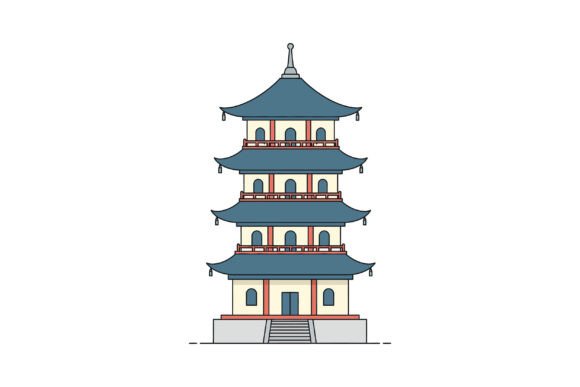
The core of this design philosophy lies in its verticality and symmetry. A detailed illustration of a multi-tiered pagoda with blue roofs and decorative elements showcases traditional architectural features that are both aesthetically pleasing and structurally logical. When integrating such assets into your workflow, the goal is not merely to insert an image but to leverage the inherent order of the design to guide viewer attention and establish tonal consistency. This approach requires a shift from viewing these illustrations as static decorations to treating them as functional components of a broader design system.
The Strategic Role of Architectural Assets in Project Planning
In the initial phases of any creative project, asset selection dictates the trajectory of the design process. Traditional Asian Pagoda Building Design fits seamlessly into workflows that require a sense of established authority, tranquility, or cultural specificity. Before beginning the execution phase, professionals must assess how these architectural elements align with the project’s core message. For instance, a publisher releasing a translation of classical literature might use the tiered structure of a pagoda to symbolize layers of knowledge or narrative depth. In this context, the asset serves as a visual metaphor, reinforcing the content before the reader engages with the text.
During the planning stage, it is crucial to consider the scalability and adaptability of the chosen illustrations. A generic clip-art approach often fails to meet the quality standards expected by today’s audiences. Instead, sourcing high-fidelity vectors allows for precise manipulation. The availability of multiple file formats—such as SVG, EPS, JPG, and PNG—ensures that the asset can be deployed across various mediums without loss of quality. This versatility is essential for entrepreneurs and small business owners who need to maintain brand consistency across social media, printed brochures, and large-format signage. By securing comprehensive file packages early in the process, teams avoid the bottleneck of converting low-resolution images later, thereby streamlining the production timeline.
Technical Integration and File Format Compatibility
The practical implementation of Traditional Asian Pagoda Building Design relies heavily on technical compatibility. Modern design workflows involve a complex ecosystem of software tools, from Adobe Illustrator and Photoshop to web development environments like VS Code or CMS platforms like WordPress. Understanding which file format serves which purpose is critical for efficiency.
- SVG (Scalable Vector Graphics): Ideal for web integration. SVGs allow developers to style elements using CSS, enabling interactive hover effects or color changes that match dynamic themes. For a pagoda illustration, this means the blue roofs can be programmatically adjusted to fit seasonal campaign colors without altering the source file.
- EPS (Encapsulated PostScript): The standard for professional printing. When preparing materials for high-end brochures or packaging, EPS files ensure that the crisp lines of the decorative elements remain sharp at any size. This format is indispensable for printers who require vector data to avoid pixelation.
- PNG (Portable Network Graphics): Best for digital composites requiring transparency. If a designer needs to overlay the pagoda onto a textured background or a photograph, a PNG with a transparent background saves hours of manual masking. It is particularly useful for social media graphics where quick turnaround times are prioritized.
- JPG (Joint Photographic Experts Group): Suitable for rapid previews and non-transparent web use. While less flexible than vectors, JPGs are universally compatible and lightweight, making them ideal for email newsletters or internal presentations where file size matters more than editability.
By organizing these files into a structured directory before starting the design work, teams reduce friction during the execution phase. A well-organized asset library allows freelancers and agencies to retrieve the correct version instantly, maintaining momentum and reducing the cognitive load associated with file management.
Enhancing Visual Narrative Through Detailed Illustration
A detailed illustration of a multi-tiered pagoda with blue roofs and decorative elements does more than fill space; it anchors the visual narrative. The specific choice of blue roofs, often associated with tranquility and immortality in certain East Asian contexts, adds a layer of semantic meaning to the design. When incorporating such specific features, designers should pay attention to the surrounding whitespace and complementary color palettes. The intricate decorative elements, such as upturned eaves and finials, draw the eye upward, creating a natural flow that can guide users through a webpage or a printed layout.
In educational contexts, these illustrations serve as accurate references for students and educators. History teachers and curriculum developers can use these assets to create engaging slideshows or worksheets that accurately depict traditional architecture. The precision of the vector lines ensures that structural details, such as the bracketing systems under the eaves, are visible and clear. This level of detail supports learning objectives by providing students with reliable visual information, fostering a deeper understanding of architectural history.
For marketers, the use of such detailed imagery can differentiate a brand in a crowded marketplace. In an era where minimalism often dominates, the richness of Traditional Asian Pagoda Building Design offers a counterpoint that suggests craftsmanship and attention to detail. This can be particularly effective for luxury brands or services that wish to convey a sense of heritage and reliability. The key is to balance the complexity of the illustration with the simplicity of the overall layout, ensuring that the pagoda enhances rather than overwhelms the primary message.
Workflow Optimization and Quality Control
Integrating complex architectural illustrations into a professional workflow requires rigorous quality control. One common pitfall is the misuse of raster images for large-scale prints, resulting in blurry edges and unprofessional outcomes. To avoid this, always verify the resolution and format of the asset before finalizing the design. When working with the downloadable ZIP containing SVG, EPS, JPG, and PNG files, conduct a quick audit of each format to ensure they open correctly and retain their intended properties.
Consistency is another critical factor. If a project involves multiple illustrations of pagodas or other architectural elements, ensure that the style, line weight, and color saturation are uniform. Inconsistent visuals can disrupt the user experience and dilute brand identity. Establishing a style guide that specifies how these assets should be used—including minimum sizes, acceptable color variations, and placement rules—helps maintain coherence across all touchpoints. This is especially important for teams where multiple designers may be working on different components of the same project.
Furthermore, consider the long-term usability of these assets. Vector files, such as SVG and EPS, are future-proof. They can be scaled indefinitely and modified as design trends evolve. Investing time in properly organizing and tagging these files within a digital asset management system ensures that they remain accessible and usable for years. This forward-thinking approach reduces the need to source new assets for every project, saving time and resources in the long run.
Practical Applications Across Industries
The versatility of Traditional Asian Pagoda Building Design allows it to be applied across a wide range of industries. In the hospitality sector, hotels and resorts with Asian-inspired themes can use these illustrations in their lobby signage, menu designs, and website backgrounds to reinforce their brand atmosphere. For event planners, these assets can be incorporated into invitations and stage backdrops for cultural festivals or corporate events with an Eastern focus.
In the tech industry, app developers might use simplified versions of these pagoda structures as icons or loading animations, leveraging the recognizable silhouette to create a unique user interface element. The hierarchical nature of the multi-tiered design can also inspire information architecture, where content is stacked in levels of importance, mirroring the physical structure of the building.
Ultimately, the successful integration of these design elements depends on a clear understanding of their structural and symbolic potential. By approaching Traditional Asian Pagoda Building Design with a process-oriented mindset, professionals can transform static illustrations into dynamic tools that enhance communication, streamline workflows, and elevate the overall quality of their creative output. The key lies in preparation, technical proficiency, and a respect for the intricate details that define this timeless architectural style.